Podcast · 5 min · 9/21/2026
Where CI Gets Stuck: Chris Dando and Leon Hardwick on Scaling Continuous Improvement
The second in a series exploring the challenges Improvement Leaders face when scaling CI.
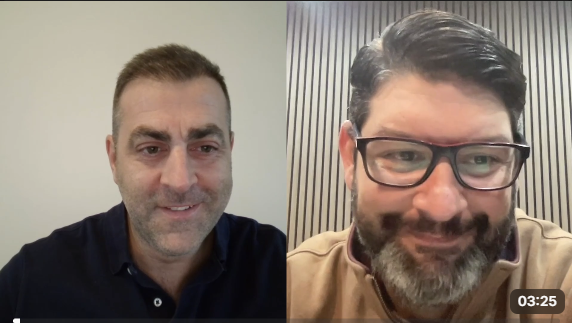
In this conversation, Leon Hardwick (CRO at OpX) and Chris Dando (Founder & CEO at OpX) explore why scaling Continuous Improvement is proving so difficult — from unclear links between CI and business strategy, to fragmented tools, limited expertise and the challenge of proving value. Drawing on conversations with CI leaders across different organisations, they discuss what needs to change before improvement can scale, why a system of record matters, and how tools like MyOpX can give CI professionals practical support in their day-to-day work.
Watch the full conversation below.
If these challenges sound familiar, from aligning CI with strategy to scaling beyond the pilot and proving its value, you're not alone. OpX is built to help CI leaders make improvement scalable.
Discover how OpX worksChris Dando — Founder and CEO, OpX (Reinvigoration Group)
Leon Hardwick — CRO, OpX (Reinvigoration Group)
Chris (00.02)
Leon, good morning, good to see you again.
Leon (00.04)
How are you doing?
Chris (00.06)
Very well. So, second episode of what's currently the working title, Diary of a CI Leader.
Leon (00.16)
It went down well last week. I had a bit of commentary on our first discussion, which is good. What have you been up to since?
Chris (00.28)
God, a lot has happened in a week, actually. One of the things I'm keen to share today are some of the conversations I had with different organisations last week, who all reached out on the back of some of the things we've been saying online. There's a couple of specific examples which we'll go into, but they're struggling to scale CI for very different reasons. So I think it'll be useful to share anecdotes from those conversations.
Leon (00.54)
I know you've had loads of meetings and stuff, and the message around having a system of record for CI improvement programmes has landed well. But what are the blockers people are exposing in those conversations?
Chris (01.10)
Yeah, well, let me give you some examples. So as I mentioned, they're for very different reasons. But when I was talking to these individuals, I wasn't surprised by some of the things that they were saying, because I've seen it before. So I'll dive into the first one.
The first one is an organisation which has about 600 people. So not enormous, but obviously big enough that when you come to scale something like CI, it can go wrong quite quickly. And this was actually with two of the exec from that business. And the context being, they tried a bit of a pilot for operational excellence, as they terming it, and delivered some good results, but then progress in the broader organisation stalled. Actually stopped. So we started getting into the conversation around why that was. And what was really, really interesting, it became clear super quickly, was that the exec had stalled in terms of what they were doing to enable the right environment for CI to flourish, without realising it. So absolutely not a criticism of them. But they'd assumed that because they'd given the blessing to the organisation to start this stuff, it would just continue. But actually it didn't. And there were a number of reasons for it. And one of those key reasons was clarity of strategy, and how that needs to set the tone for the change, the transformation that's needed in the organisation. And when we started to unpick that, that was the clear reason, right? They needed to tell the strategic story in a far clearer way and make it really overt, from a CI point of view, in terms of how that enables the delivery of that strategy. So essentially there was a missing link from top to bottom, and activity stopped.
Leon (03.29)
Great example. I think the scaling bit seems to be the bit that everybody's having problems with, and that's a really good example and highlights the problems that people are facing. But you said you had loads of conversations this week. So any more of those titbits?
Chris (03.50)
Yeah, so that first one is the exec strategy down bit, right? Around setting the right conditions for this to happen. Another conversation that really stood out last week was with an individual that leads the CI function for quite a large organisation. A few thousand people across 14 sites. So you've got that additional scaling challenge in geographical locations, and the little mini cultures that often exist across sites. Interestingly, in this example, the approach that's being used is one that really takes time. Let's prove the concept in a small space, evidence to senior leadership that this works in the way that we've designed it, and then try and replicate it. So it's a really great approach, actually, for a multi-site organisation. But the challenges here lie somewhere else. They lie in only having a small number of experts to facilitate the scaling, okay? They lie in the way that the experts have deployed improvement. And by that I mean fragmented tools. There's a spreadsheet, there's a log for ideas over there, and it's all very disparate and unconnected. So the lady that leads this team, she's got the foresight to realise that this is just going to break as soon as she goes to site two, site three, site five. It's going to fall over. So she reached out, actually, on the back of some of the things we've been saying, particularly on LinkedIn, and said, "The messages that you're giving are the problems that I've got today. Let's talk about how we can overcome these." So we had a brilliant conversation, actually, and the realisation for her as a result of that conversation was, "I need to systemise the approach that's working in this first site before I try and replicate it elsewhere, because otherwise it'll break." And if it breaks, what does that mean? Well, it means people at all layers lose confidence. And if they lose confidence, they distance themselves from it. So you can forget scaling CI, it's actually going to shrink.
Leon (06.11)
Yeah, it's so interesting because, I mean, that's obviously an organisation that's got a team, and they've tried to disseminate that approach and that way of working across lots of people and lots of sites. We've actually seen our existing customers, on their original product, scale capability, and the execution piece isn't there because they haven't got the system to drive it forward. So that systems piece is incredibly important. It's almost like, if you think of Iron Man in a suit, he's a great mind and obviously very clever, but actually the suit makes him superhuman. He has the system to make him superhuman. So it's almost getting that culture piece correct, the leadership piece correct, and then it's like, okay, now we systemise.
Chris (07.06)
Yeah, definitely. And I think one of the things I see historically, organisations wrestle with. They have to prove the need for improvement, first of all. So it normally has to start small. There has to be some pretty early progress and quick wins. And I get that, right, because that generates interest first of all, and it creates the business case for something a lot broader. But then they fall over at that point and just assume that replicating what they did on a small scale will work as you go broader, and it doesn't. It's inefficient. You don't have the people to really support it at scale. And that system, that operating system, that system of record that we talked about last week, needs to be in place before you start folding more people into it.
Leon (07.55)
So I always find, I suppose the thing that I keep coming back to, and it's not an epiphany or anything unique, but maybe the framing of this is, every other function in a business has a right to exist. It's just a given that you've got a finance function, you've got an IT function, you've got a sales function. Actually, the function that is under the most scrutiny is more often than not the improvement function, whatever you call it, whatever flavour of that you use. But it's almost like you've got to prove that you're delivering. And actually, most of the time you're making everybody else look bad. And I always find that fascinating in a world where innovation and resilience are the things that organisations are looking for. A function that can deliver that, right? And it just fascinates me that they're constantly having to justify their existence to that level.
Chris (09.02)
Yeah, totally. I agree. It always astounds me that when the belts get tightened and there's scrutiny on cost, more often than not the improvement function is under the spotlight. And I've seen time and time again over my career that the improvement team gets disbanded. It's seen as a cost centre as opposed to a value creation centre. And a lot of that is, unfortunately, down to how those improvement teams have set themselves up, right? They've left themselves open to that level of scrutiny, which leads to quite a disastrous outcome for them, often. And it's so avoidable. It's so avoidable. I see that they don't shout loud enough about the value that they're adding. They certainly don't have a consolidated, aggregated way of evidencing the value that's created. And value is not just about cost, right? It's about many other levers that improvement can pull to the benefit of the business. And the other mistake that's made is the lack of challenge up the line in the organisation to really demand that senior leaders see improvement, operational excellence, as a key enabler to deliver big strategic outcomes. And they miss that point. And of course, as soon as there's a disconnect with strategy, you're in the firing line, right?
Leon (10.34)
It's disappointing really to see the folks that have really the best interests of the business at heart and in mind. I don't know if that's true when other functions don't really have that same lens on them. The conversations you've been having, do you see folks at a sort of mid to senior level, the penny dropping and going, okay, we've missed the point of this? Or is it less obvious than that?
Chris (11.07)
No, the penny's dropped, the penny's dropped for sure. But you've got to be really deliberate about how you try and create understanding at those levels. So with very senior people, the key ingredient is their behaviour, right? So yes, they need to understand, but they need to know how to behave in a way that enables this. And lots of senior people don't like having the behaviour challenge, believe it or not. So it's always interesting when we run sessions with these people. But they're bright, and they get things if you can contextualise in the right way. So whenever we work with those sorts of teams, it's less about "do this differently" and more about "does this make sense if it was in place in your business, and what's your role within that?" And then the penny starts to drop.
Leon (11.57)
I also think that CI folks could probably do with thinking about their roles as almost a sales and evangelism role, in particular, because I think it's got a bit of a perception challenge, really. Obviously the folks at the top are all scrutinising it. But I think somebody said to me probably years ago that the more senior you are, the more of a salesperson you are. And so selling that programme and the outcomes is a real skill to be learned.
Chris (12.34)
Yeah, totally, totally. And I think the other bit that doesn't get the attention that it needs, and it's linked to exactly what you're saying, is that awareness that I need to manage stakeholders intensively. As an external consultant, you're taught that stakeholder management is one of the most important things that you have to do. And you have to over-manage stakeholders, in a way, and go way beyond what you think is probably necessary. Now, when you look at internal improvement teams, they are a consultancy, right? But their clients are all internal. And they often lose some focus on some of those critical things. So they under-manage stakeholders. And of course that then leads to a lack of clarity, and lack of clarity equals questions. So there are some fundamentals that should get more attention.
Leon (13.29)
Yeah, I think sales is probably seen as a dirty word. Maybe lobbying is a better way to position it. I suppose it's stakeholder management and lobbying, because you get that clarity at all levels in an organisation, and a system of record helps with that because it keeps it front and centre in people's minds. Interesting.
Chris (13.54)
Exactly. So, just thinking about this coming week, it's a big week for OpX. What have we got going on?
Leon (13.59)
So as many of you know, we've got the LCS conference this week, Wednesday, with the awards as well in the evening. We are the headline sponsors of the event, so we'll be there with a stand, talking to people about their programmes and showing them how they can benefit from the system of record that we've built. We've got three of the team, plus obviously yourself, Chris, from OpX. Two of the team are speaking, doing some introductory sessions, and then I've got a little speaking slot. I believe the subject was posted already, but it's the alphabet from an outsider's view. Talking about what I've seen in the CI world, and maybe trying to provide a slightly different lens on it. So I'm going to try to do it as fast-paced and as pithy as possible. And then obviously we've got the awards in the evening. Yeah, it's an exciting week. Tomorrow afternoon we're meeting as well with the folks from the event for a drink with the founder, obviously yourself, Chris, and the team will be there as well. So, busy week. We've got lots of good things going on, and we've also built the MyOpX mobile app, which is live now, and it's exclusively available to the LCS event attendees. Yeah, we're quite excited about that. There's more to do on promoting it this week and getting in front of people. So yeah, we've got an app that people can pick up and use for free moving forward, but exclusively for the LCS community this week.
Chris (15.53)
Yeah, looks good. I'm really excited. I've obviously not seen the detail of what you're talking about, but really looking forward to it. The subject is quite enticing, and I know you've got a really interesting perspective on this whole world, coming at it from a different angle. So yeah, looking forward to that.
Talk a little bit about MyOpX. What does MyOpX do?
Leon (16.20)
So we wanted to give people a tool that they could use every day as a CI pro. And we've provisioned it on the foundations of OpX OS, that's what we call it. Improvement pros use lots of different enterprise tools, like Microsoft Excel, Word, Jira, Miro, all of these different tools, but they are very generic. What we've done is we've built an app shaped for CI pros, where individuals can use tasks to run improvement ideas and projects, and also a little canvas that they can use to investigate how they might do an A3, et cetera. So it's essentially, coming back to the Iron Man analogy a second ago, a little bit like Jarvis for the CI individual. They can raise ideas, they can explore those ideas, they can deploy a project using a specific methodology, and also have a basic task board so that they can run tasks, and they can invite some colleagues in there as well. And we've also pre-loaded it with 11 improvement lessons, learning content that folks can have a look at. And we've also provided the flexibility for folks to invite some colleagues in there. It's a free product. It's there for folks to use, just to help them on their day-to-day improvement journey. And then they have a route to maybe do something with the enterprise later on, if they're interested in looking at a broader system of record. But yeah, we've tried to build something that you can lean on every day, a bit like Iron Man leans on Jarvis to help him make decisions, et cetera, in an app that you can use on both iPhone and Android.
Chris (18.23)
Yeah, sounds good. I'm looking forward to seeing how people get on with it this week. I know most of the people at the conference are going to download it and use it, right? As you say, it's something that can be used straight away, add value immediately. It doesn't cost anyone anything, which is great, right? Because we're keen to add value and show people the art of the possible with this stuff.
Leon (18.40)
Yeah, exactly. And I think one of the things that we've done straight off the bat as well, we realised that everybody's using different types of AI agents, and we've got an MCP connection where you can actually ask Claude or ChatGPT to go into MyOpX and create a new idea or create a new project for me. So you can interact with the app through those tools as well. And yeah, that's quite exciting. That's probably the biggest, I suppose, advancement, as it fits within how people work generally, day to day. Personally, I think everybody's using an agent these days, and providing people with a way to interact with it is crucial. So yeah, we'll send out a link with this podcast so you can download the app and start playing with it as well.
Chris (19.40)
Fantastic, fantastic. And this week for the conference, we've obviously got some of our current OpX OS clients coming. Some are travelling quite a distance. So I'd imagine you're looking forward to catching up with those guys in person.
Leon (19.51)
Yeah, it's interesting because it's not just UK and Europe based. We've got folks from the Middle East and from North America coming over. So yeah, very international feel this year, which is great.
Chris (20.04)
Yeah, and the LCS conference is sold out. Fully sold out. So it's going to be a fantastic event. Very, very much looking forward to it.
Leon (20.06)
Totally sold out, yeah. Looking forward to it. And obviously we get a bit of a dinner as well at the awards, and rub shoulders with folks in the space. Yeah, looking forward to it. It should be a good day and a half.
Chris (20.27)
Fantastic. Okay, Leon, I think that wraps up our second chat in the series. Looking forward to seeing you in Manchester for the conference this week, and looking forward to talking again next week on this podcast.
Leon (20.29)
Wraps up number two. Nice to see you, and see you next time.
Chris (20.36)
Brilliant. Take care. See you soon.
Building the system is one thing. Scaling it is another. OpX gives CI pros the system of record to prove the impact they're already delivering.
Get started with MyOpX