Podcast · 5 min · 10/9/2026
Scaling Improvement in PE-Backed Businesses, with Gemma Archibald
Gemma Archibald has spent 12 years in C-suite roles in private equity-backed portfolio companies. In this episode she talks about what it really takes to scale continuous improvement.
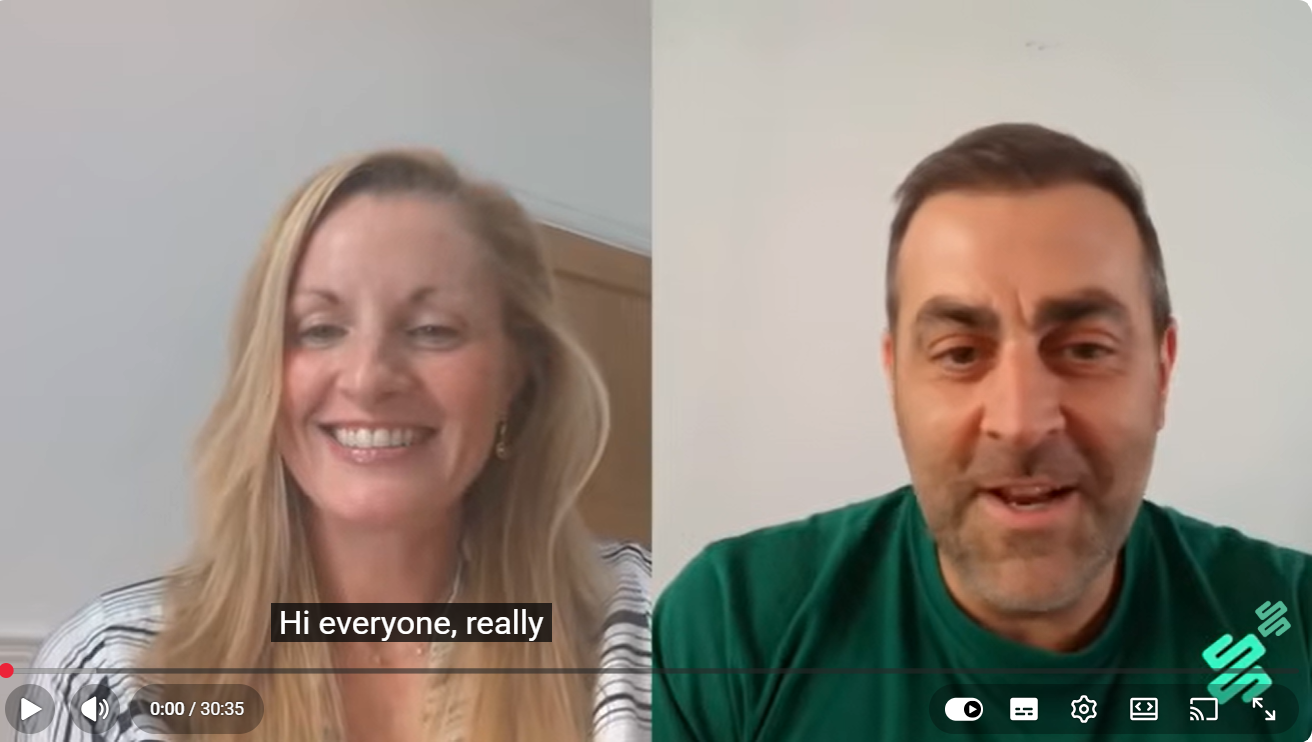
Gemma Archibald has spent 12 years in C-suite roles in private equity-backed portfolio companies, where every day of the holding period counts. She joins Chris to talk about what it really takes to scale continuous improvement: building capability that goes beyond the training course, sustaining the day-to-day improvements that never make it to the boardroom, and proving the value when the CFO asks. They also cover why strategy loses meaning at every handoff, how to win over a workforce that's been through a cost-cutting era, and Gemma's three tips for anyone starting out in CI.
Watch the full conversation below
Chris: Hi everyone. I'm really delighted to be joined by Gemma Archibald today on the Scaling CI podcast. I'll hand over to Gemma in a second to introduce herself properly. I've known Gemma for quite a few years. We've worked together, and we have a very similar academic background, so we always end up having brilliant chats about improvement, operational excellence and transformation. I've been really looking forward to this one, so let's get into it. Gem, over to you. Give us a bit of your background first, please.
Gemma: Sure. Hi everyone, I'm Gemma Archibald. Like Chris said, I've got a background in Lean. It became a passion of mine many years ago, and I've used it in lots of my roles. For the last 12 years or so I've been in C-suite positions, from Chief Operating Officer to Divisional CEO, largely specialising in private equity-backed portfolio companies. So quite intense, and all about driving enterprise value. That's a little bit about me.
Chris: Fantastic. I know from working with Gemma that she's got really deep expertise in improvement as well as in those exec roles. And the PE-backed piece, Gem, leads me into the first question. This podcast is all about scaling CI, and as soon as a private equity firm gets involved, they want one thing, and that's scale. So as a soft intro to our chat, tell us about some of the challenges that come with scaling improvement, based on your experience, particularly in private equity-backed organisations.
Gemma: In private equity-backed organisations, as lots of people will know, you're usually working to a time frame. The firm invests in an organisation with a view to a holding period of somewhere between three and seven years. During that time they're trying to turn it into a much bigger organisation, through M&A, through growing the top line, and through operational efficiency that improves EBITDA.
A huge part of achieving that is taking what you already have in the business and doing more with it. Improving throughput, finding new ways to enter different markets, and so on. So bringing a constant continuous improvement lens to the business is really important. Every single day matters in a PE-backed portfolio company, because you're trying to drive growth within a particular window, and do it in the best way possible.
That means getting the whole organisation behind you, improving every single day. Improving the work is the work, effectively, so you can keep improving margins and keep selling more products to more people in more markets. And it becomes quite challenging to get whole organisations, from the senior level right down to entry level, interested in improving the work.
First, that's about skill: being able to do it, and do it well. Second, it's about sustainability: being able to do it day in, day out. And third, it's about being able to track it. It's all very well starting a new project, and people often get really excited about something new. But how do you actually see whether it's making a difference? There's very little point running lots of initiatives if they make no real difference to the top line, the bottom line or the culture. So tracking what you're doing, and whether you're doing it well, is a significant challenge.
Chris: Brilliant. So there are three things you've said that I want to explore: capability, sustainment, and evidence and impact. They're all massively important. Let's take capability first. One thing we see in organisations that start improvement is a broad-brush approach to training, without then directing people at something specific so they can apply the learning, evidence the improvement, and ultimately deliver business impact. How have you tackled capability building in the organisations you've worked in?
Gemma: You have to invest. The old adage goes that if you don't invest in your people, chances are they're not improving the work, and they may end up going somewhere else. So investing in people has a retention advantage, and in the war for great talent, that matters.
But you have to invest in the right capability. There are lots of courses out there that teach you the basics, but they don't make a difference, because learning a theory is one thing and putting it into practice and seeing results is quite another. There are lots of toolbox talks and so on, and they're well and good, but they don't teach you the discipline. They don't teach you how to actually make a difference and know whether you're making one. Sometimes it's a bit of a waste of money. Everybody gets very excited about the training course.
So one thing I've done is vet the courses myself, to make sure we're looking at the actual return on investment. And quite often I've brought in consultants, and part of the deal is that they're not only helping us drive an improvement, they have to teach my team how to do it. So the team is learning, practising, implementing, being coached and being watched. It's not simply going away on a two- or three-day course and hoping they get it.
From my own experience, when I was taught continuous improvement, I was taught the theory and then I had to go and practise. I truly believe that makes a significant difference. You need someone to hold your hand, teach you and coach you while you actually get to practise.
Chris: I totally agree. And for me, capability in the improvement context is often focused on creating some experts. Yes, you need technically skilled people to start to scale. But you've got to look above and below that as well. To really create a culture of improvement, you have to touch the many. You have to create widespread awareness and give people the capability and confidence to highlight problems and then solve them within their teams, rather than relying on a crack team of experts. You still need those experts, because they solve the bigger problems, but you've got to touch everyone.
On top of that, you've got your leadership population. They need a different skill set from an improvement point of view. It's all about setting the right environment and role-modelling the right behaviours, rather than solving the problems themselves. That's how we go about it, a top-to-bottom approach. What are your thoughts?
Gemma: Definitely. Yes, we're training some really great experts, and I've invested in Lean experts and continuous improvement teams. But a huge part of what they then do is go out and spend time with managers, and the managers are taught how to drive improvement in their teams. That includes helping people understand things like visual management, metrics, and how to use data to see where the problems are.
That's quite an investment of time. But over time, managers are improving their own processes, and using coaches to make sure they do it in the right way.
And all of this only really works if your senior team really cares. If the senior team aren't asking the questions, aren't showing up and showing interest, aren't praising the really good work when someone drives an improvement, whether that's reducing lead time or changing a process so there are fewer handoffs and fewer people needed, then why would anyone else be interested? You care about what your boss cares about. In reality, that's what happens day to day in an organisation. So you need training at executive level, so leaders know what to look for, as much as you need it throughout the organisation. That takes time.
You also need a system to help. This can't all happen hidden in spreadsheets and on laptops. You've got to find a way of making it visual, and you need a system to keep track so it stays on the agenda all the time.
Chris: That's an amazing segue into a question I was going to ask a bit later, so I'll ask it now. One thing we see holding many organisations back is that as they try to scale improvement, there's a reliance on a crack team of heroes, as they're sometimes called. We've talked about capability above and below that, which you absolutely need. But improvement also quickly becomes fragmented, because there isn't one system of record for improvement, underpinned by an operating system. Have you seen that in organisations you've worked in? Improvement is getting momentum, you're starting to scale it, but it's pinned together by a Miro board here, a spreadsheet there, some training decks over there, and it starts to creak at the seams.
Gemma: Definitely. Particularly where you've got really great people involved in multiple projects as well as a day job. You might free up someone's time and say maybe 30% of it can go on projects, and then you discover that person is actually on three projects, because they're great and everybody wants them. It's quite hard to get visibility of that.
It also gets difficult to track the effectiveness of what each project is doing. Like all things, everything starts with a great idea, and maybe one or two projects aren't performing. That's hard to see when you're linking spreadsheets together and trying to see the outcome of each individual piece of work. And then, quite rightly, you've often got the CFO asking: what difference does this make to the organisation? How do I see the money? How do I see the top-line and bottom-line improvement?
That's when it easily starts to lose momentum, and people lose a bit of faith and confidence, which is really the death knell for improvement activity.
Chris: Definitely. That impact piece, the third of your three points, is hugely important. The organisations that start to do this well really understand impact in the broader sense. It's not just the big, chunky projects an expert delivers, which we typically measure quite well. It's all the micro-improvements that happen day to day because you've started to change the culture. How do you truly understand the aggregated impact of that? That's a major problem, and organisations are wrestling with it all the time. And, as you said, at some point someone's going to ask you to show them the value. That sets the hares running and causes all sorts of problems, because we can't answer the question quickly.
Gemma: Definitely. And the one that every organisation I've ever come across struggles with, and we certainly did, is this. When you create a culture of improvement, people really start to buy in. They think, actually, they are serious. They want to hear my opinion. They want to hear my voice. So how do you capture those ideas, evaluate them, and feed back to people on what was good, or explain why an idea isn't going to be taken forward?
Everybody struggles to find a way of doing that and following it full circle. Everyone starts with idea boxes, or posting ideas into different channels. I've lost count of how many times I've tried to do it on Teams channels and the like. But everyone gets fed up in the end, because they lose track of what happened. They don't know if their idea made it through. What started as a great, culture-building recognition tool falls foul, because people feel nobody's really listening. It comes down to the lack of a system that makes it easy and traceable, so you can track the return on investment.
Chris: Totally agree. The other part of that scenario that's so important, and can be the death of improvement, is the feedback loop you alluded to. If, for whatever reason, we can't make the change, or the idea can't move forward right now, and people don't hear that back in a timely way with the context around it, they're going to stop. A CI culture is dead if people don't raise issues, opportunities, improvements, whatever you want to call them.
Gemma: Absolutely.
Chris: I want to switch from impact to the second of your three points, which was sustainability. Talk to me about scenarios where sustaining improvement has worked well, and maybe the opposite, and what the reasons might have been.
Gemma: Big strategic value-creation initiatives tend to go really well. They have a lot of executive sponsorship. They usually follow a very robust programme management style, with review and reporting mechanisms. That's often because their visibility is really high. Senior people are usually set as sponsors, so they monitor them, and that often works really well. But those are typically major projects that need substantial investment, run over a decent period of time, and get discussed in the boardroom.
What tends to be more difficult is the things that improve the day to day. How do you keep track of those, keep engagement, and keep senior-level visibility of them when they're happening at team-management level and in individual teams?
As I said, I'm a huge believer that improving the work is the work. Largely, you're either delivering for customers, selling more things, or improving what already exists to make it better. Most people fall into one of those categories. And tracking the improvements that need to happen is really challenging, because things never stay the same. Every process either gets better or worse. So even when you've improved a process, you still have to monitor it and keep evolving it, otherwise it just goes backwards.
What you often see is teams solving the same problems over and over, because they haven't got a way of building that wedge to prevent slippage. They haven't got a system for tracking it, or a way of constantly monitoring how to keep improving it. As a senior leader, I found that perplexing. How do I build something systemic that's constantly monitoring, so I don't have to keep dropping down to check it's happening? That was quite challenging.
Chris: Really interesting, and it absolutely resonates with me. Sustainment is quite a big word in improvement, and it means different things to different people. For me, sustainment almost sits outside CI expertise. It sits within ways of working in operational teams, because those ways of working create habits, and habits feed sustainment. So it's multifaceted, but I agree it's a challenge, because by its very nature you have to train, coach and build capability at a leadership level, and that can be difficult. Middle leadership is often called out in transformation as the "treacle layer", and I think that's where this sits. Have you got experience of that?
Gemma: Yes, definitely.
Chris: I want to shift gears a little and talk about the link between strategic intent and improvement. I come across this quite often: organisations mobilise a great improvement programme, and at some point there's a disconnect between the executive team and its strategy, and the improvement and change happening down in the organisation. It always makes me wonder why that disconnect happens. Improvement is important to the senior people in the executive team, but suddenly there's a lack of alignment between those big, audacious strategic goals and what's happening day to day. I'm really interested in the PE world here, because you'll have big growth targets, which means you need transformational change, which means you need improvement. Do you find there's a good connection or not?
Gemma: I think it depends on the make-up and training of the senior team. I firmly believe that taking those big, audacious goals and translating them so every person understands them is the role of the senior team and the management layers underneath: directors, heads of, functional team managers and so on.
But like all improvement, every handoff is an opportunity for it to go wrong. It's no different from any other process in that sense. I've seen it go wrong where you're sitting in a room as senior leaders saying, right, these are the big goals we're after. We want to break into this new market, or we're going to launch this new product. That sounds simple. It may be hard to achieve, but it's easy to understand.
But every layer brings its own interpretation. They ask, what can we achieve? Maybe we can't achieve it. People often put quite a lot of limits on themselves. So by the time it reaches the individual, they're not quite sure what they're doing or why. There's a big difference between the strategic intent and the task people end up doing.
The interpretation gets lost along the way. I've seen things go quite off track, and at board level you're wondering why you're not gaining traction. If you diagnose it, the meaning has been lost between the stages, because the deployment process hasn't been robust enough to make sure everybody understands what we're doing, why we're doing it, how we'll measure it, and how we'll know whether we've got there.
Chris: Absolutely. Dilution comes with handoffs. I've never thought about it in that top-down way before, and I really like it. With our process mindsets, we always know waste is created as we hand off across a process. But you're right, in the strategy process the handoffs create the waste and the dilution too. And it brings us full circle to where we started. To make this really work at scale, you have to have the infrastructure, the operating system, that connects all of these dots from top to bottom, so CI can scale beyond a small team of heroes.
Gemma: Definitely. You have to have the training, and understand what we're doing, why we're doing it and how we're doing it. You have to invest in the people, and it has to be constantly on the agenda. And you need that operating system. If you think of the body analogy, it's the skeleton that keeps everything upright, and then all the parts start working together as an interdependent organisation.
Organisations often miss that. Senior leadership sets the goals and assumes it'll just happen. But we know that isn't the case. You've got to get everybody to understand why we're doing it, what it is, how we want it done, and how we'll know whether we've got there. That's a whole systemic approach.
Chris: I want to talk a bit about the impact on people when they get involved in improvement. You and I have both been on personal and professional journeys with this. I remember when the light bulb went on for me for the first time, quickly followed by a bit of shame, because I realised some of my leadership perhaps wasn't based on the best approaches. I got over that and learned a different way. One thing that always strikes me is the power of thinking and seeing differently that comes with improvement, and I still find it super exciting that you can create that at scale if you set it up right. Share some anecdotes from your career about the impact on people when they learn this stuff.
Gemma: Very similar to you, it was a whole light-bulb moment, and a real "I've done it that way before" moment. I was looking at a supply chain process at the time, trying to improve different parts of it to make delivery on time in full better. And while I was having my training, I realised I was trying to improve something that would make no difference at all to getting the shipment out. I remember thinking, wow, I had no idea. I had all the right intentions. I was trying to make something better, but it was making no difference to the whole. That's often the light-bulb moment.
Since then, I've taken on a coaching role with people in organisations, to pay it forward and teach them continuous improvement techniques, and I've invested in people going on different courses. When they come back, they start to realise they've been tinkering with a process to try to make it better, and the tinkering makes no difference. They've spent loads of time, effort and care on one bit of the process, but fixing it doesn't solve the problem they're trying to solve.
You need a completely different way of thinking. You step back and ask, what are we trying to achieve? Actually, the problem is over here, not there. If we fix this, it makes the difference to the whole. You literally see people light up and go, wow. That's why being taught to do this the right way matters so much, because people are investing time and effort in it.
And the joy people get from being part of something where they can see a difference, when they fix the right bit of the value stream and it makes a real difference to the numbers, the lead time, the customer satisfaction scores or the service delivery, is incredibly empowering. It's almost addictive, like a free drug. They want to do more and more, and that real positivity spreads. You end up with free improvement people in your organisation, for want of a better phrase, who are there every day trying to make a difference and make the business more profitable and more scalable. It's quite a different feeling.
Chris: I love that. And, like me, you clearly get a kick out of it, I can tell from how passionately you're describing it.
Gemma: Yes, I still love getting my hands dirty and being in the mix of it all.
Chris: A linked question. Some organisations struggle to get people to engage with improvement, and there are many reasons for that: the existing culture, "what's in it for me", and others. Have you ever struggled to get people engaged in improvement, and why do you think that happened?
Gemma: Yes, hugely. Particularly when I went into an organisation that had had really tough times culturally. Before it was bought by the private equity firm, its previous backer had very much taken a cost-out approach, so investment hadn't been significant. People were afraid of losing their jobs. They didn't want to put their heads above the parapet. It was literally a survival organisation.
I went in after some investment had been made, so I was lucky. But I had to get people to believe that life was going to be different. We were improving things not to get rid of people, but to scale the business. We needed to improve processes so we could sell more to customers without adding lots of headcount. Getting them to believe that was quite a challenge.
You're scratching your head a bit. How do I get these people to believe me, and care enough to want to be part of it? The trick was the old adage: bring them in and help them design it. You're there with some of the tools and techniques to do it in the best way possible, but you get their ideas. They're the ones speaking to customers. They're on the front line day in, day out. They're the ones thinking there could be a better way.
So we got their input in small groups, through lots of different approaches, and it spread. We looked for change agents, too. Sometimes there were a couple of people who were more negative, and we brought them in, because if you help those people change, the word spreads quicker.
Over time, if you bring people in, teach them and help them, they feel much more fulfilled coming to work every day than just doing the minimum. Nobody really wants to do the bare minimum for eight hours a day when they could use their brain at work. People love to use their brains. People love to problem-solve. It's in them, if you can just build the trust. To this day, I still use that tactic.
Chris: That's a great approach. One thing I've found helps dissolve early resistance is getting people to work around purpose. I believe most people go to work to do a good job and want to do their best. Very few don't have that mindset, and that's the starting point. So they get frustrated when things get in the way of delivering the service or the product. They learn to live with that frustration, because it happens every day and becomes part of the work.
When you start to unlock that, and help people ask what we're here to do, what our purpose is, and how we design our work to deliver it better, it gives them a moment to go: my word, some of the things I've done for ten years don't help me deliver our purpose. They actually get in the way of it. If I could get rid of them, I could do a better job, and that's what I come here to do. You can dissolve resistance quite quickly that way, and I've found it works really well across all different types of business.
Gemma: You're absolutely right. I think we have a slightly cynical view that people won't want to do it. But when you speak to individuals, they want to make a difference. They want to be engaged. They don't want to spend eight hours a day doing the bare minimum. You've just got to break down some of those barriers, and genuinely listening to understand their point of view gets you a tremendous way forward.
Chris: Brilliant. Gemma, I'm going to bring our chat to a close, but I'll put you on the spot first. You've got so much experience of delivering and scaling CI across different types of organisation. For the people listening or watching, what are your absolute top tips, your must-dos, to be successful?
Gemma: For people who are interested in CI?
Chris: Absolutely.
Gemma: Number one is be curious. Ask the questions. Go and understand. Is there a better way? Why do we do it that way? Could it be done differently? Could it be done better? And then speak up, because most organisations want to hear that from people. They want people to be engaged. So definitely be really curious.
Second, read. There's so much great literature out there to help you understand it, and most of it is actually common sense. That was my big light-bulb moment: this is a lot of common sense, but you don't realise it. If you're interested in continuous improvement, process improvement, or understanding how businesses operate from a slightly different angle, there's brilliant literature out there, and some of it is written incredibly well. It's not remotely boring or textbook-y. It's really quite fascinating.
Third, volunteer. Put yourself forward for one of those projects. There's so much you can learn by reading, and then so much more you learn by doing. So volunteer, put your head above the parapet, get on a project, even if it means doing a little bit extra. The amount you'll learn is phenomenal. A huge amount of the knowledge and experience I use in my C-suite role has come from being on projects, improving processes and learning from great people around me. That's really helped me in my leadership career. So those are my three tips.
Chris: Fantastic, three brilliant tips for everyone watching or listening. Gem, thanks so much for your time today. Really great chat, with lots of nuggets in there. If people want to get in touch with you, presumably they can find you on LinkedIn and drop you a message?
Gemma: Yes, absolutely. Find me on LinkedIn, Gemma Archibald. I'm more than happy to chat to anybody.
Chris: Thanks a lot, Gem. See you soon. Cheers now.
Gemma: Thanks so much, Chris.
Building the system is one thing. Scaling it is another. OpX gives CI pros the system of record to prove the impact they're already delivering.
Discover more about OpX